
Lunatechs Meetup #11 · May 14, 2026
A packed room for AI trading demos.
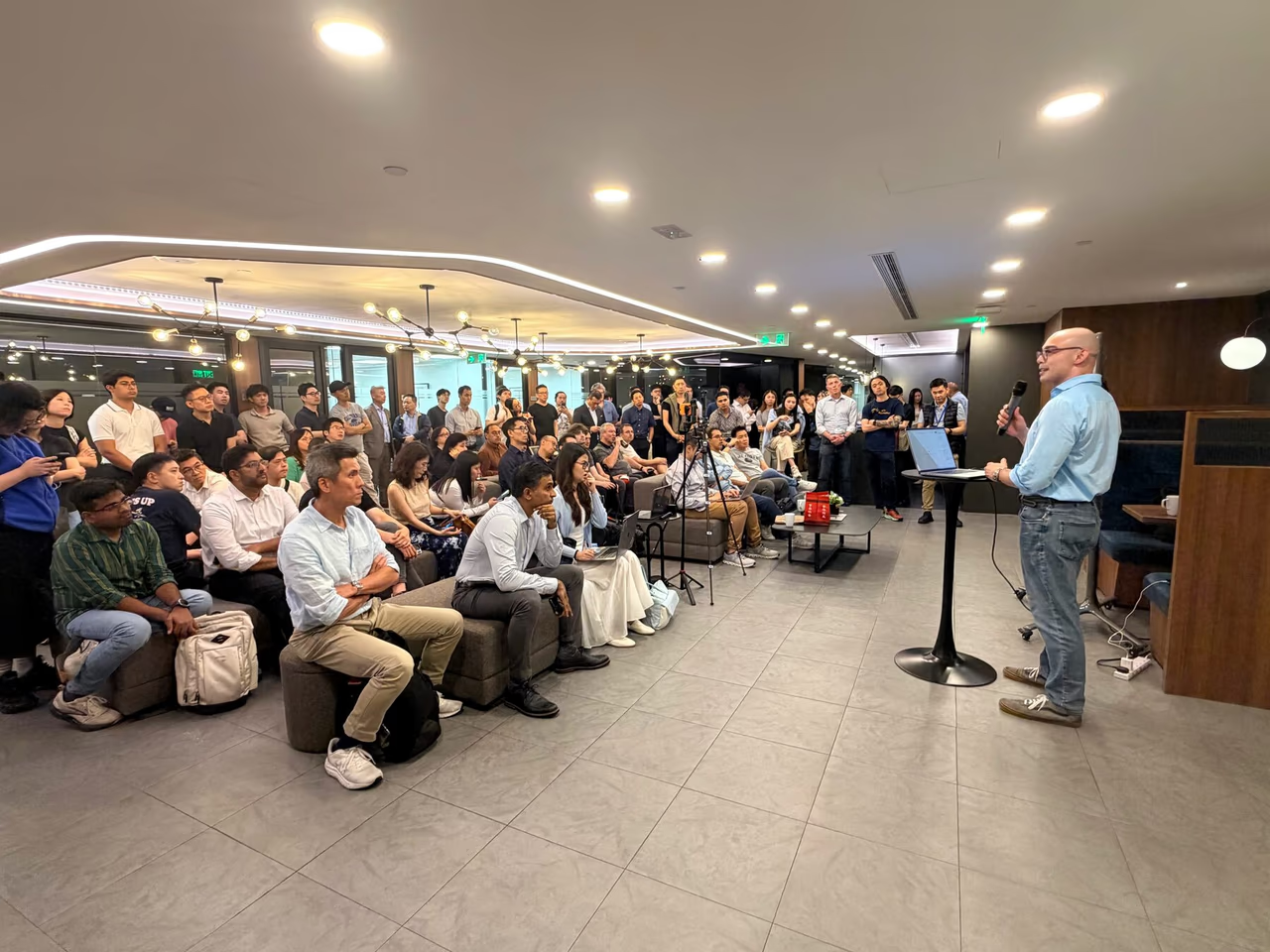
The room was full before the talks started: packed couches, people along the glass, a livestream camera, and the usual food-and-badges cluster.
I was one of the four organizers and hosts. My job was check-in, room flow, speaker timing, and keeping space for questions.
”AI trading” gets vague fast. This night stayed specific: SEC filings, research dashboards, crypto factor tests, and natural-language trading agents.
Why this one worked
Less slides, more laptops.
We started with the disclaimer that nothing in the session was financial advice; it was a technical workshop about data, scripts, research tools, and trading interfaces.
The strongest moments were practical: how to parse a filing, how to test a factor, where to put checks, and when an agent should stop.

Four workflows
Four speakers showed four different jobs for AI.
Jason Xu
Python + LLMs for the junior-banker grind: fetch filings, map line items, reconcile statements, and generate a 3-statement model.
Sandeep Muthangi
Agents for research notes: market data, outlier reports, thematic shifts, stored notes, and visualizations.
Shally Liu
Claude Code for crypto factor research: data exploration, sentiment features, factor testing, and a cautious first backtest.
Dale Satre
Minara as an agentic trading interface: research chat, strategy studio, backtesting, paper trading, and defined execution rules.
The constraint
Jason’s rule was the cleanest one.
Use code when the answer has to be exact. Use the LLM for messy labels, wording, and matching.
A general agent building a model from a 10-K can wander. The cleaner version was specific: Python fetches filings, code builds the structure, checks verify it, and the LLM helps map line items.


The room
Builders, quants, founders, finance people, and curious first-timers.
Compass Offices hosted us on the 16th floor at Lee Garden Two in Causeway Bay. Lunatechs and Berkeley Club Hong Kong brought the crowd.
Questions went straight to the hard parts: temperature, restatements, signal quality, Claude Code versus Python scripts, and the line between research assistant and trading system.

After the talks
The pizza counter kept the night going.
People stayed after the livestream ended. Old friends caught up, strangers compared notes, and a few people asked for repos.
Most of the best conversations happened away from the projector, with paper plates in hand.


Closing note
Hong Kong needs more rooms where demos can break in public.
AI in finance is easy to sell from a slide. It is more useful when someone opens the laptop, shows the script, and names the guardrails.


